EMERGENCY TRAVEL KITS:
PACK SMART PACKING A SUITCASE:
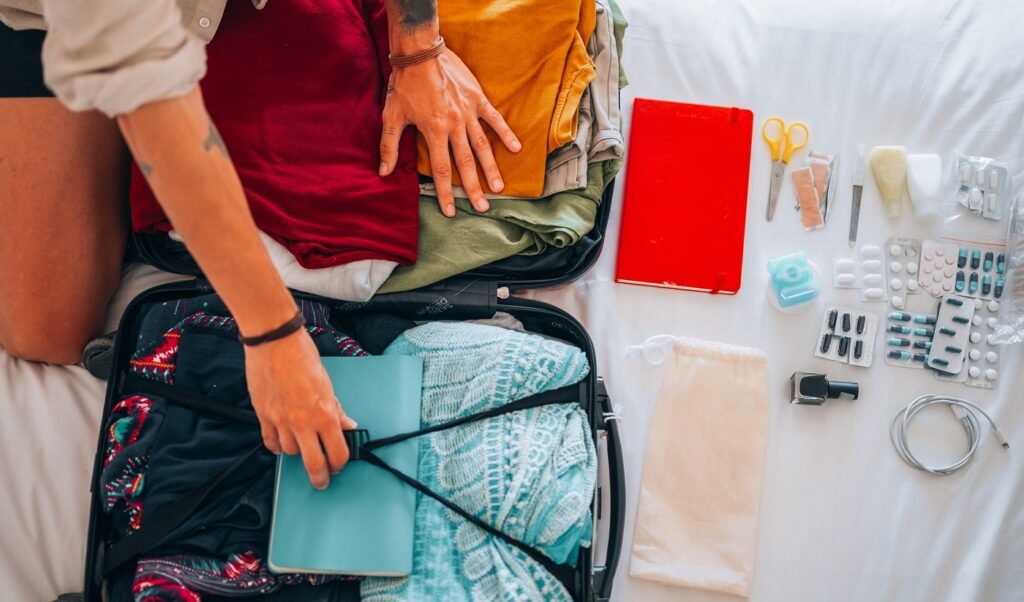
Prepare a travel health kit with items you may need, especially those that may be difficult to find on your trip.
If you have specific medical conditions, check with your healthcare professional for any additional items to consider bringing along. Be aware that some countries have restrictions on what medications you can bring with you, so check with the U.S. Embassy for the country you are traveling to.
The list below provides a wide range of items to consider including in your travel health kit. You may not need every item. What you pack depends on your destination and the health risks specific to that area. Check CDC’s Destination webpages to learn more about the health risks at your destination and what to pack.
Documents
Bring copies of these documents with you on your trip. Documentation requirements may vary by destination. Check your destination’s website to ensure your documentation is in the correct format (print or digital) and whether additional documentation is required. If possible, keep a print and digital version of each document with you during your trip.
Copies of your passport and travel documents
Contact card with the street addresses, phone numbers, and e-mail addresses of a family member or close contact in the United States
Lodging information for your destination(s)
Information for your healthcare professional(s) at home
Copy of immunization records
Proof of yellow fever vaccination (if required for your trip)
Copies of prescriptions (medications, glasses, or medical supplies)
Health insurance card and documents (including travel insurance)
List of hospitals or clinics (including emergency services) in your destination(s)
US embassy or consulate information for your destination(s)
Medicines
Antacid
Antibiotics, if prescribed by your healthcare professional, such as for travelers’ diarrhea
Antihistamine
Antimalarial medicines, if prescribed by your healthcare professional
Antivirals, if prescribed by your healthcare professional, such as for influenza (flu)
Cough drops, cough suppressant, or expectorant (a medicine that helps loosen mucus)
Decongestant
Diarrhea medicine (such as Imodium or Pepto-Bismol)
Laxative (mild)
Motion sickness medicine
Pain and fever medicine (such as acetaminophen or ibuprofen)
Prescriptions, preferably in their original bottle
Sedative or sleep aid (mild)
Supplies
Condoms
Diabetes testing supplies
Disease-specific rapid tests
Earplugs
First-aid kit
Glasses, contact lenses, contact lens solution, and hydrating eye drops
Hand sanitizer (containing at least 60% alcohol) or antibacterial hand wipes
High-quality masks
Insect repellent (with an active ingredient like DEET or picaridin)
Medical alert bracelet or necklace
Sunglasses and hat
Sunscreen (with UVA and UVB protection, SPF 15 or higher)
Water purification tablets or filter
Additional Resources
Check the Transportation Security Administration website for updates on permitted and prohibited items, including medicines and medical devices that you are allowed to carry onto an airplane.
Some items may not be allowed in other countries. It is a good idea to check the Customs and Import Restrictions section of the U.S. Department of State Tips for Traveling Abroad.
Enroll in the Department of State Smart Traveler Enrollment Program to get the latest safety updates and help in an emergency.